Traditional Pattu Pavadai Designs That Never Go Out of Style
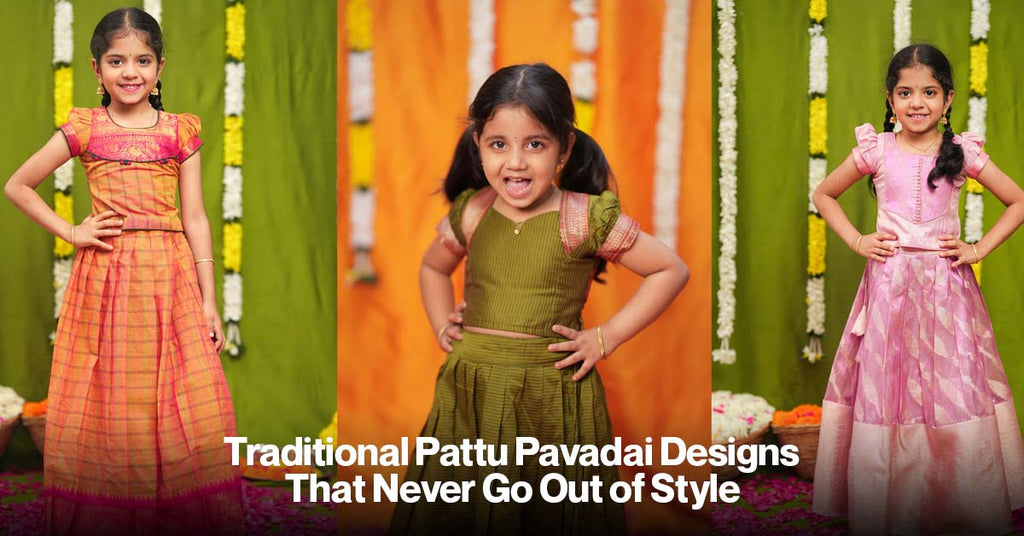

Every South Indian family has a memory tied to the Pattu Pavadai. The rustle of silk as a child runs across the courtyard. The weight of the zari borders is carefully ironed before a wedding. A grandmother pulls out the neatly folded Pattu Pavadai from the wooden trunk, reminding everyone that three generations have worn this piece. These are not fashion choices in the usual sense. They are traditions carried in fabric.
The appeal of the traditional Pavadai Sattai lies in how little it bends to changing trends. Colours shift, borders may get slimmer, sometimes the blouse patterns adapt, but the essence remains untouched. Walk into a temple festival or a family function, and you will still find little girls in pavadais that look much the same as the ones captured in photographs from thirty years ago. That continuity is what makes Pattu Pavadai special.
The Essence of Pattu Pavadai
At its core, the Pattu Pavadai is simple: a silk skirt, a matching or contrasting blouse, and zari borders that frame the fabric. The shine of the silk gives it life, the border gives it weight, and together they create an attire that looks complete without needing much else. These details have hardly changed in decades. Trends come and go in children’s clothing, but the pattu pavadai online has resisted that pull. Families still look for the same richness in the weave and the same brightness in color because that is what makes it feel traditional, not seasonal.
Design Elements That Stay Timeless
The zari border is what gives a Pattu Pavadai its weight. Without it, the skirt looks plain. With it, the silk comes alive. Families rarely compromise on that part because it carries the identity of the dress.
Colour is another area that has stayed the same. Rich jewel shades such as red, green, maroon, and dark blue continue to dominate Pattu Pavadai Designs. These colours suit the shine of silk and have been used for generations. They do not fade with fashion because they belong to tradition.
Motifs are part of the story, too. Peacocks, temple borders, and simple floral vines are woven again and again in Pattu Pavadai. They are not picked for novelty but for continuity, connecting the pavadai to older weaves and cultural art.
The blouse has always been the place for variation. Some keep puff sleeves, some choose a straight cut, and some add small embroidery. This is where families experiment, but the skirt is left traditional. Whether stitched at home or bought as pattu pavadai online, that balance remains. Small changes at the top and timeless design at the base.
How Pattu Pavadai Designs Adapt but Stay Traditional?
- Fabrics are no longer always the thick silks of earlier times. Many families choose lighter silks or blends, so children can move without feeling weighed down. The shine remains, but the heaviness is gone.
- Colours have opened up. Jewel tones still dominate, yet pastels like ivory, peach, or soft green are now used for smaller functions. They feel fresh, but the pavadai is still recognised for what it is.
- Blouses are where most changes appear. Sleeveless cuts, cap sleeves, or simple puff sleeves keep children comfortable. The skirt rarely changes; it stays pleated and full.
- Even with these shifts, the structure is untouched. A long skirt, a blouse, and a touch of zari or contrast is what makes it a traditional wear.
- In every adaptation, the focus is on ease of wear. The designs continue to evolve, but not in a way that distances them from tradition.
Some of our Must-Haves In Your Wardrobe
1) Ishara Pastel Green Kids Pavadai Set
This Pattu Pavadai is cut from premium khadhi silk blend tissue, so the fabric has a soft shine but does not weigh the child down. The pastel green is unusual for a pavadai, yet it works because the colour lets the floral print stand out. The blouse repeats the same print, keeping the set playful while still holding the familiar Pattu Pavadai shape.
There is no heavy zari border here. The design depends on contrast through fabric choice, not metallic thread. That makes it easier for children to wear at smaller functions where comfort matters as much as tradition. Anyone looking for Pattu Pavadai online will see this as a version that keeps the structure but allows a fresher palette.
2) Prisha Olive Green Kids Pattu Pavadai Mini
This set is made in Chettinad cotton, so the fabric feels sturdy and has texture. The Pattu Pavadaiskirt is pleated and finished with a zari border that shows fine motifs. Banarasi brocade is used in panels to bring contrast against the olive green base. The blouse is sleeveless with a scoop neck, practical for children to wear and still formal enough for a function.
It is still a Traditional Pattu Pavadai, just approached differently. Among many designs, this one shows that heritage fabrics and zari work can be combined with a lighter, child-friendly cut. The form stays traditional, while the details make it easier to use.
3) Kayalvizhi Ivory and Orange Mini
The Kayalvizhi set pairs an ivory pavadai with a bright orange blouse. The skirt is lightly pleated, giving it movement without bulk. The blouse is finished with short puffed sleeves and a round neckline, details that keep it close to the look of a Pattu Pavadai. Gold lace runs along the edges, worked with sequins that catch the light without overpowering the fabric.
Among current designs, this piece holds on to the familiar silhouette while keeping the embellishment gentle. It is festive in colour, simple in structure, and comfortable for children to wear for longer hours.
4) Inbha Green with Maroon Mini
This Pattu Pavadai set brings together Narayanpet cotton and Chanderi, with zari accents that give the Pattu Pavadai a traditional edge. The blouse is cut in deep maroon, finished with zari detailing, and has tie-up knots on the shoulders. It is simple in structure, easy for children to wear, yet festive in appearance.
The skirt is green with check patterns woven across and a broad zari border at the base. The pleats give it flare and movement, keeping the Pattu Pavadai shape intact. It is a good example of designs that stay close to heritage while remaining light and practical for younger wearers.
Conclusion
A Pattu Pavadai has always been more than clothing. The zari borders, the pleated skirt, and the matching blouse come together to create a pavadai sattai that marks childhood celebrations and family rituals. When a child wears it, the memory is carried in photographs, in festivals, in the way elders remember the day. Even when the fabric is put away, the meaning remains.
Designs shift slightly with time. Lighter silks are used, softer colours are chosen, but the core has not changed. Families browsing Pattu Pavadai online are still searching for the same shape and presence that earlier generations wore. It is part of the larger world of Indian Ethnic Wear for Women, yet unique in how it belongs to children. That is why the pavadai does not fade out with fashion. It stays as a living tradition handed forward.