


Half Saree Online: Traditional Langa Davani Styling Guide
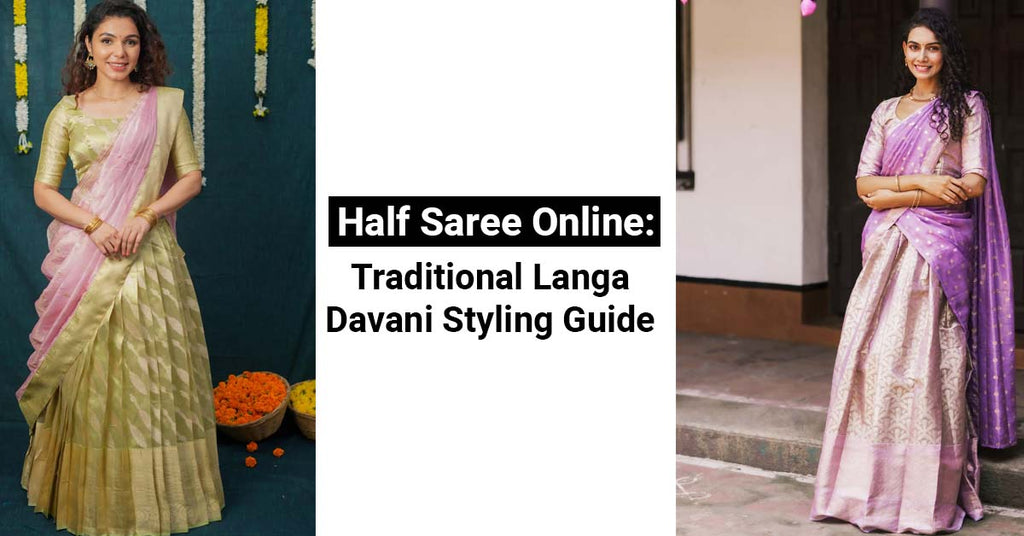

A Half Saree for women, also called Langa Davani, is the dress that follows childhood in many South Indian homes. It is the stage before a saree, worn when a girl steps into her teenage years. The set comes with three pieces: a long skirt, a blouse, and a draped dupatta. Each part has a role, and together they mark the change from playful pavadai to something more graceful.
Families continue to keep this practice alive because the half saree is tied to festivals, rituals, and coming-of-age ceremonies. Even now, parents look for a half saree online, searching for silks, cottons, and newer blends. The styles may shift in colour or fabric, but the meaning has not changed. Traditional Langa Davani remains an attire that carries tradition forward while being practical to wear.
The Cultural Significance of Langa Davani
The Langa Davani has always been more than clothing. In many families, it was the dress a girl wore when she was no longer a child, but not yet ready for the saree. That change was not small. Her first Traditional Langa Davani was usually worn at the function that marked her coming of age. Elders blessed her, relatives remembered the day, and the half saree itself became part of the memory.
After that, it became her dress for festivals, temple visits, and family gatherings. The blouse and skirt gave comfort, and the dupatta taught her the feel of draping. Slowly, she learnt how to carry herself in something more formal. That is why families still hold on to it. Even today, when western dresses are common, the half saree for women has not disappeared. A half saree still signals belonging to tradition, and that is why it stays.
Traditional vs. Contemporary Draping
In a Langa Davani, the drape of the dupatta decides the look. The traditional way is to let it fall long, with hand-made pleats resting on one shoulder and the other end tucked neatly into the waist. For rituals, the length is kept generous so it covers well, giving the half saree the grace of a saree without losing the blouse and skirt.
Contemporary styling often makes the drape lighter. Dupattas in georgette or tissue are used instead of heavy silks, and the pleats are pinned to stay in place. Some even drape it diagonally like a stole for easier movement. These changes are practical, but the principle remains the same. No drape is complete without the davani.
Ways to Drape the Davani that Define the Half Saree
The dupatta in a Langa Davani is not just an extra cloth. The way it is draped decides the character of the half saree. A simple change in folds or placement can make the same blouse and skirt look traditional, formal, or contemporary. Families have held on to the classic drape for rituals, but younger women now experiment with newer styles that feel lighter and easier. These are a few ways the Davani continues to be worn.
1. Classic Shoulder Drape
The davani is pleated by hand, tucked into the waist, and brought over one shoulder with the loose end falling at the back. This is the style most people associate with the Traditional Langa Davani, used for festivals and rituals.
2. Cross-Body or Pinned Drape
The dupatta is pulled diagonally across the chest and pinned so it stays in place. Some pleat it tight, others leave it broader, but the point is comfort and security. This drape is popular at cultural events or dance, where the cloth should not slip.
3. Belted Drape
A slim belt, kamarbandh, or fabric tie holds the davani at the waist. It adds shape, prevents shifting, and blends tradition with a touch of modern styling.
4. Saree-Gown Drape
The dupatta is styled almost like a gown or saree pallu, wrapping fluidly with the skirt to create a continuous flow. It is a modern experiment, mostly seen in designer half sarees and bridal shoots.
5. Butterfly Drape
The davani is drawn firm over the shoulder and spread into wing-like folds at the back. It gives a sleek, stylish look. It is often chosen for contemporary or evening occasions.
The davani is what makes the set a half saree. Without it, it would be just a skirt and blouse. With it, the Traditional Langa Davani is recognised immediately, whether draped loosely, pinned, or carried like a saree pallu.
Styling a Half Saree for Modern Occasions
-
Lighter fabrics for smaller functions: Not every event needs the weight of pure silk. For birthdays, casual gatherings, or daytime pujas, many families now pick georgette, tissue, or blended silks. They fall well, look festive, and children can wear them for hours without complaint.
-
Pastels that feel fresh: Shades like peach, pale green, and lavender are showing up more often. They do not replace the deep reds and greens used for grand occasions, but they work beautifully for simpler functions.
-
Detailing with restraint: Small details can lift a half saree. A bit of sequin on the border, light lace at the edge, or embroidery near the blouse is usually enough. Too much of it makes the davani stiff, and it loses the natural fall.
-
Blouses that change the look: Sleeveless cuts are now common in city functions, puff sleeves keep to tradition, and elbow-length sleeves are chosen when the occasion demands formality. The blouse often decides how modern or traditional the outfit feels.
-
Accessories that don’t overpower: A pair of studs and a thin chain is plenty for a pastel half saree for women. For weddings, heavier earrings, bangles, or a kamarbandh can be added, but always in proportion.
-
Looking through half saree collections online: Online shopping for a half saree gives a sense of both worlds, as the heavy silk sets that echo heritage, and the lighter, playful ones designed for today’s smaller gatherings.
Why Half Sarees are a Must-Have in 2025?
-
The half saree has not faded out with changing trends. Half sarees are still worn at temple functions, family ceremonies, and festive days. In 2025, when many traditions are being simplified, this dress continues to hold its place.
-
Unlike a saree, the blouse and skirt are stitched, which makes it easier for younger girls to manage. The davani brings the formality, so the look is graceful without being difficult to wear.
-
Lighter silks, organza, and pastel shades are becoming common. Lighter fabrics and pastel shades make the half saree easier to wear, not only for festivals but also for smaller gatherings.
-
Blouses change the look quickly. Puff sleeves keep it traditional. Sleeveless or short sleeves feel modern and are easier in warm weather.
-
For many, the half saree is the stage between pavadai and saree. It teaches draping, posture, and the way a dupatta is carried, making it more than just clothing.
-
When families check online for a half saree, they usually want two things. Some search for the classic silks with heavy borders, the kind worn at weddings. Others look for lighter, trendy versions that their daughters can wear to smaller functions. Both exist side by side now, which is why the half saree continues to be chosen.
Final Thoughts
In 2025, the half saree is still part of family traditions. It is chosen for the way it carries culture forward, while lighter fabrics and new colours make it easier to wear today. At Ekanta, every Indian Ethnic Wear for Women is crafted to reflect this balance, offering families timeless options that honour heritage while fitting beautifully into today’s occasions.

